


Ever wondered why AI images sometimes look off or lack polish? The answer is simple. It’s about moving from random prompts to a structured methodology for better control.
With an advanced tag matrix, you can set specific details for body, camera, and wardrobe. This method changes how you work with AI, making sure your projects look great and stay true to their theme.
Learning to use these stacks lets you control your work’s final look. Whether you’re making characters look consistent or setting up complex scenes, this powerful framework helps you achieve professional results.
Key Takeaways
- Implement a structured prompting system to eliminate randomness in AI imagery.
- Use anatomical definitions to ensure consistent character proportions.
- Apply cinematic stacks to control lighting, angles, and depth of field.
- Define wardrobe parameters to maintain stylistic coherence across multiple generations.
- Leverage the advanced tag matrix to achieve professional-grade visual results.
Understanding the Fundamentals of the Advanced Tag Matrix Guide
An advanced tag matrix is key to making high-quality images. It breaks down complex prompts into simple, logical parts. This lets you control the image-making process better.
This method turns your work into a reliable process. It’s no longer just luck.
Defining the Tag Matrix Architecture
The advanced tag matrix uses AI models like WAN 2.2. These models have a special design called Mixture of Experts (MoE). It uses different experts for different parts of the image-making process.
Think of your prompt as a layered document. Each layer has a specific task. This way, the AI knows exactly what to do at each step.
Why Stacking Matters for AI Consistency
Without a advanced tag matrix, the AI might create random images. Stacking helps build a solid base before adding details. This keeps the AI focused on what you want.
Stacking tags in order helps the AI understand your vision better. This is key for keeping images consistent and accurate. Here’s a table showing the difference between random prompts and a structured matrix.
| Feature | Unstructured Prompting | Advanced Tag Matrix |
|---|---|---|
| Control | Low (Randomized) | High (Modular) |
| Consistency | Poor (Variable) | Excellent (Stable) |
| Efficiency | Slow (Trial & Error) | Fast (Preset Stacks) |
| Complexity | Limited | Highly Scalable |
Mastering Body Stacks for Anatomical Precision
Creating AI characters with precision is not a coincidence. It comes from a deliberate, stacked approach to anatomy. First, define your subject’s proportions before adding details. This ensures your AI subjects stay physically correct through generations.
This detailed method lets you control the final look with high accuracy.
Defining Base Body Types and Proportions
The first step in creating a character model is the skeletal frame and proportions. Choose a base body type that fits your vision, like athletic, slender, or robust. These tags are the foundation for all layers.
After setting the base, refine the proportions for a natural look. Adjust limb length, torso width, and shoulder breadth. Consistency here avoids distorted limbs or awkward postures later.
Layering Skin Texture and Detail Tags
Once the frame is set, focus on the surface-level realism. Layering skin texture tags brings a more organic and lifelike appearance. Add details like pores, blemishes, or skin tone variations for depth.
Stack these tags logically, starting with broad textures and moving to fine details. This order helps avoid AI confusion. By balancing these layers, your character feels real, not machine-made.
Managing Muscle Definition and Body Fat Percentages
The last step is sculpting the physique with muscle definition and body fat settings. These settings affect how light interacts with the character, crucial for a cinematic look. Use tags to highlight muscles or soften the frame for a natural look.
The table below shows how different stack configurations affect the final character:
| Stack Component | Primary Effect | Recommended Usage |
|---|---|---|
| Base Frame | Proportions | Always define first |
| Skin Texture | Surface Realism | Layer after base |
| Muscle Definition | Physique Tone | Apply for athletic looks |
| Body Fat | Softness/Volume | Adjust for natural variance |
By systematically adjusting these variables, you control the character’s look. Remember, small tag changes can make big differences in accuracy.
Optimizing Camera Stacks for Cinematic Composition
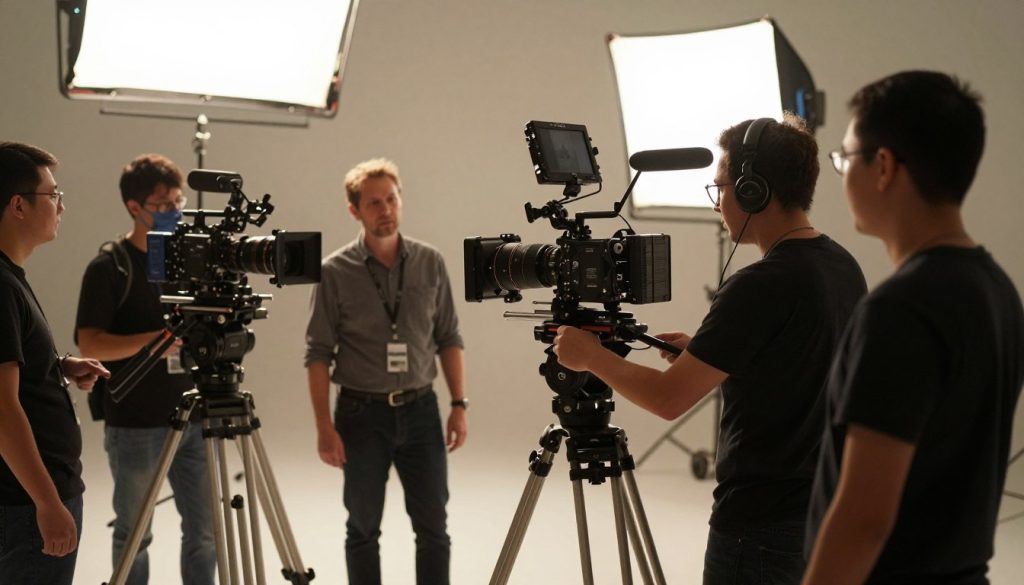
Mastering your camera stack is key to making your AI images look professional. By controlling the virtual lens, you decide how the viewer sees your scene. Intentionality is crucial for moving from random images to high-end digital art.
Selecting Focal Lengths and Lens Types
The focal length changes how your subject looks. A 24-70mm lens offers many framing options. You can capture wide scenes or close-ups without moving.
Wide-angle lenses, under 35mm, are great for showing the environment. Telephoto lenses, over 85mm, make the background blur. This isolates your subject and adds drama.
| Lens Type | Focal Length | Best Use Case |
|---|---|---|
| Wide Angle | 16mm – 35mm | Environmental storytelling |
| Standard Zoom | 24mm – 70mm | Versatile portraiture |
| Telephoto | 85mm – 200mm | Subject isolation |
Adjusting Aperture and Depth of Field Settings
Aperture settings control the depth of field. A low f-stop number, like f/1.8 or f/2.8, blurs the background. This focuses the viewer’s attention on the subject.
This method gives your images a professional touch. For sharp scenes, like architecture, use a higher f-stop. This keeps everything clear.
Positioning Camera Angles for Dynamic Perspectives
The camera angle affects the power dynamic in your images. A low-angle shot makes the subject seem powerful. A high-angle shot makes them seem vulnerable.
Try Dutch angles for a sense of unease. Always think about the camera height and subject eye level. This keeps your images grounded and natural.
Structuring Wardrobe Stacks for Visual Cohesion
Mastering the art of clothing stacks is key to creating believable characters. When designing outfits for AI subjects, how you organize wardrobe tags matters a lot. Visual cohesion is what turns a simple character into a professional digital portrait.
Categorizing Clothing Materials and Textures
To get high-quality results, define the physical properties of fabrics. AI models work best when you match specific material tags with textures. Think brushed silk, distressed denim, or matte leather.
By organizing these elements, you help the AI render light interaction correctly. Consistency in material definition stops fabrics from looking like plastic or flat surfaces.
Layering Garments for Complex Outfits
Creating complex outfits needs a clear hierarchy in your prompts. Start with base layers like undergarments or bodysuits. Then add outer layers like jackets or accessories.
“Fashion is the armor to survive the reality of everyday life.”
This layering technique helps the AI grasp the depth and volume of clothes. When you stack items right, you avoid clipping errors. This ensures each garment looks natural on the subject.
Balancing Color Palettes and Fabric Patterns
Visual clutter can come from too many colors or busy patterns in one outfit. Choose a main color and use secondary tones for contrast.
If you use detailed patterns, limit them to one garment. This keeps the focus on your main subject. Strategic color balancing makes sure your character stands out, not gets lost in a mix of textures and colors.
Integrating AI Porn Tags for Enhanced Realism
Adding specialized ai porn tags to your work is key for top-notch realism. By picking the right tags, you make your images detailed and lifelike. This helps the model understand complex scenes well, without getting too confused.
Selecting High-Impact Descriptive Keywords
For the best results, use high-impact keywords that describe the scene and how subjects interact. Instead of vague terms, pick specific details like lighting and skin texture. This way, the AI knows exactly what mood you want in your image.
Avoiding Tag Bloat and Prompt Interference
Don’t add too many tags, as it can mess up the model’s understanding. Too many tags can make the image look wrong or blurry. Keep your prompt simple by focusing on the most important parts of the scene.
If your images start looking off, try cutting back on tags. Less is more. This lets the model focus on what really matters, avoiding mistakes that can ruin a good image.
Refining Subjectivity with Style Modifiers
Using style modifiers lets you control the look of your images while keeping them realistic. These modifiers help the AI aim for a specific style, like movie lighting or super-realistic skin. By mixing these with your main tags, you create a unique look that’s all your own.
Try different weights for these modifiers to find your perfect style. Getting it right takes time. Keep track of what works best, so your vision shines through in every image.
Developing Effective Createporn Prompts
When you give vague instructions, AI outputs can be disappointing. It’s crucial to use precise syntax for success. Short or unclear commands make the model use default settings, which might not match your vision.
By crafting createporn prompts with a clear structure, you control the final image. This approach ensures your vision is accurately represented.

Constructing the Core Prompt Syntax
A good prompt follows a clear hierarchy. Start with the main subject, then add environmental details, lighting, and style. This layered approach helps the AI understand your needs.
Don’t use extra words that confuse the AI. Instead, choose clear nouns and adjectives. This way, you avoid unwanted changes in the image.
Utilizing Negative Prompts to Filter Artifacts
Negative prompts are key to quality. They tell the AI what not to include. List common issues like distortions or clutter in your negative prompts.
Refining your negative list helps avoid errors. This is crucial for visual consistency. A standard negative template lets you focus on the positive aspects of your prompt.
Iterative Testing and Prompt Weighting Techniques
Prompt weighting lets you set importance levels for keywords. Increase a keyword’s weight if it’s not clear. Iterative testing helps find the right balance for your model.
Change one thing at a time to see its effect. This method shows which tags are most important. The table below shows how different strategies improve your workflow.
| Strategy | Primary Benefit | Complexity Level |
|---|---|---|
| Basic Syntax | Fast generation | Low |
| Negative Filtering | Reduces artifacts | Medium |
| Prompt Weighting | High precision | High |
| Iterative Testing | Refined consistency | High |
Advanced Workflow Automation for Tag Management
Scaling your production means moving away from manual tasks. Handling many projects quickly adds up typing time. An automated system keeps your creative energy focused on the final product, not setup.
Organizing Tag Libraries for Rapid Access
A well-organized library is key to an efficient workflow. Categorize your ai porn tags into folders by anatomy, lighting, and clothing. This makes finding specific tags quick, not slow.
Use a database or spreadsheet to track top combinations. Consistency is crucial for professional output. Organized assets speed up your creative process.
“Efficiency is doing things right; effectiveness is doing the right things.”
Implementing Preset Stacks for Consistent Results
Preset stacks are project building blocks. They save time by using tested createporn prompts. This ensures your work looks consistent.
Create presets for different lighting or angles. Pull the right stack for a new image and tweak details. This method reduces errors and keeps your work cohesive.
Scaling Production with Batch Processing
With refined stacks, batch processing boosts your output. Modern tools let you queue many prompts at once. This keeps productivity high without lowering quality.
- Automate repetitive tasks to save time.
- Standardize your best prompt combinations.
- Batch your rendering to maximize hardware usage.
These advanced techniques turn your workflow into a powerful engine. Managing ai porn tags becomes easy, letting you explore more createporn prompts confidently.
Troubleshooting Common Tag Matrix Conflicts
Even the most precise AI workflows can run into unexpected problems. When your output starts to look confused, it’s time to check your advanced tag matrix. Make sure every instruction is clear and easy to follow.
Identifying Semantic Overlap in Stacks
Semantic overlap happens when tags fight for the same space. This makes the model guess what you want. Vague instructions can lead to unwanted scenes that don’t match your vision.
“The quality of your output is directly proportional to the clarity of your input; remove the noise to reveal the masterpiece.”
To solve this, look at your advanced tag matrix for any extra words. Cutting out the doubles lets the model focus on what you really want.
Resolving Lighting and Shadow Inconsistencies
Lighting problems often come from using opposite tags, like “harsh noon sun” and “soft studio rim lighting.” These mix-ups create weird shadows that ruin your scene.
Stick to one main light source in your stack for a unified look. If you need different lights, make sure they work together, not against each other.
Fixing Anatomical Distortions Through Tag Reordering
Anatomical mistakes often come from how the model reads your tags. Putting important body tags at the end can mess up the structure.
Move your key body tags to the start of your advanced tag matrix. Reordering your tags can fix many body or proportion problems without rewriting your prompt.
Refining Your Personal Style Through Matrix Customization
Learning to customize your matrix is key to blending tech skills with creative vision. By stepping away from default settings, you can create images that stand out as truly unique.
Creating Signature Looks with Custom Stacks
To make your work unique, build your own stack library. Choose ai porn tags that match your style, whether it’s realistic or artistic.
Focus on these key elements for your custom stacks:
- Lighting profiles that set the mood.
- Color grading presets for skin tones.
- Texture overlays for depth.
Balancing Artistic Vision with Technical Constraints
Every model has limits that can test your creativity. You need to balance your vision with the software’s tech to get consistent results.
Refine your createporn prompts with small tweaks. This method helps you see how different inputs affect the model.
Documenting Successful Prompt Combinations
Keeping a detailed log of your work is crucial for growth. By tracking which ai porn tags work best, you build a solid base for future projects.
Good documentation should include:
- The model version used.
- Your createporn prompts sequence.
- Notes on lighting and camera settings.
This method lets your style grow with your skills. Consistency is key to being a pro, and your matrix is your main tool.
Conclusion
You now have a solid plan to improve your digital art with better tag management. By using these methods, you turn random results into clear, high-quality images.
Being consistent is key to professional AI art. Treat your tools and wardrobe like parts you can mix and match. This way, you know exactly what you’re getting.
Improving your art means trying new things with tools like Stable Diffusion or Midjourney. Spend time tweaking your prompts to see how they change your art. Keep track of what works best to build a collection of reliable images.
Creating your own style is an ongoing process. Keep learning new skills and stay true to your artistic vision. Share your work and explore new tech to keep growing. Your journey to making amazing content begins with how you use your prompts.
FAQ
How does the architecture of an advanced tag matrix improve image consistency?
The advanced tag matrix breaks down complex prompts into simple layers. It uses a Mixture of Experts (MoE) design. This means different parts of the model handle different parts of the image.
By organizing tags this way, the AI avoids random, chaotic results. This leads to more predictable and high-quality images.
How can I use a camera stack to achieve professional cinematic composition?
Your camera stack affects how the scene looks. Choosing the right focal lengths and lens types helps. For example, a Sony FE 85mm f/1.4 GM is great for portraits.
By controlling aperture and camera angles, you create intentional, dynamic scenes. These scenes look like they were shot by a pro.
What are the essential components of effective createporn prompts?
Good createporn prompts are structured and clear. They define the scene to avoid random changes. Using negative prompts helps remove unwanted artifacts.
By focusing on what’s important, your prompts guide the AI. This keeps your vision intact.
How do I integrate ai porn tags without causing “tag bloat”?
Choose descriptive keywords that focus on realism and texture. Avoid using too many tags. Instead, use style modifiers to refine the image.
This approach helps the AI focus on key details. It ensures accurate skin and lighting.
What is the best way to troubleshoot anatomical distortions or lighting conflicts?
When you see unexpected distortions, it’s time to troubleshoot. These problems often come from tags competing for space. Reorder your tags and fix lighting issues.
This fixes errors and improves image quality. It makes sure the model knows what to focus on.
How does prompt weighting affect the final output in a complex matrix?
Prompt weighting lets you adjust the importance of tags. If some details are ignored, increase their weight. This ensures the model focuses on them.
This is key for a balanced image. It makes sure the subject and background work well together.